What to Gift Someone Who Has It All: Why Emotions Beat Things




“They already have everything. I want to give something personal, something no one has ever gifted before.” We hear this sentence from clients more often than any other — and it perfectly describes the main problem with gifts. Physical items no longer surprise us: another gadget, perfume, or SPA gift card receives a polite thank-you and gets forgotten in a couple of weeks. Here is what to do about it — and where science and artificial intelligence come into play.
Why Even Expensive Things Quickly Stop Bringing Joy
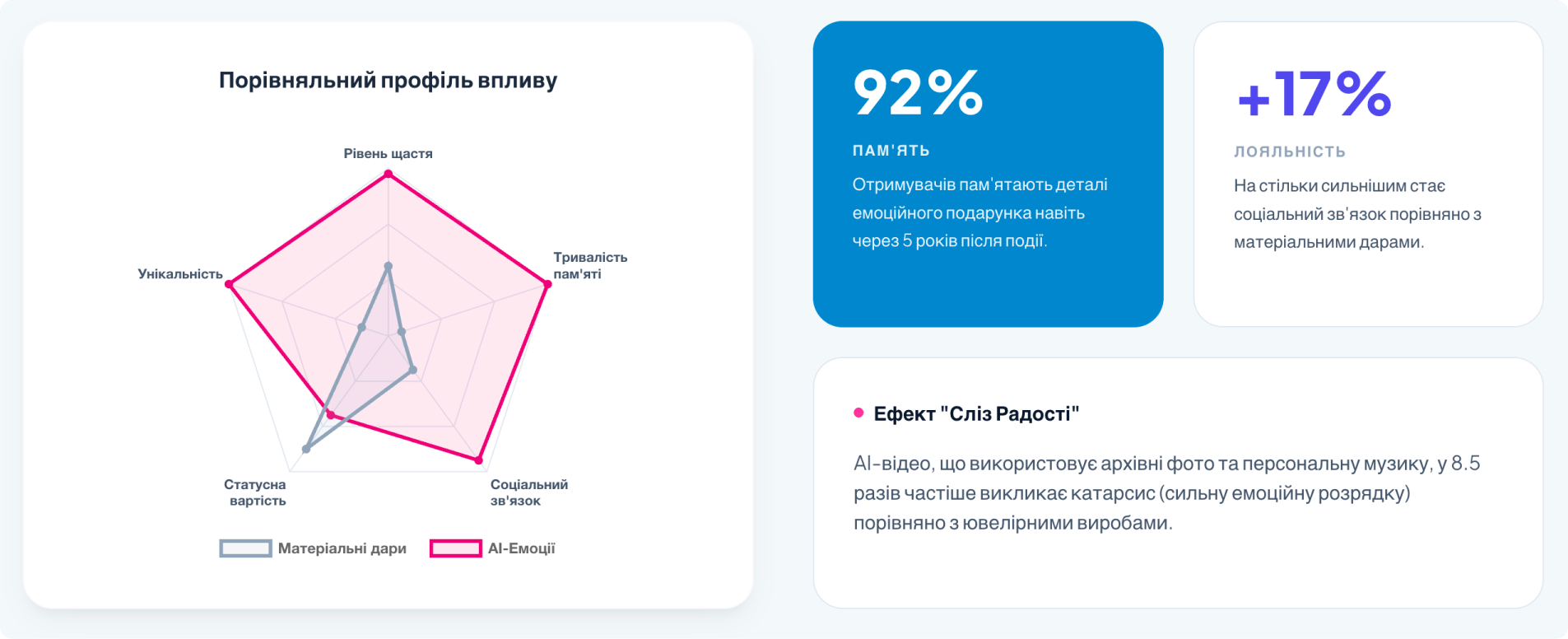
In psychology, this is called hedonic adaptation: the brain rapidly gets used to new things. Even the most anticipated item brings a surge of joy for just a few days or weeks, and then becomes an ordinary background object — the phone just sits in a pocket, the watch simply tells the time. The item hasn't gotten worse; your attention to it has just faded.
This doesn't happen with experiences. Back in 2003, psychologists Leaf Van Boven and Thomas Gilovich showed in their famous study “To Do or to Have?” that people derive more happiness from lived experiences than from material possessions. The explanation is simple — a physical item remains separate from us, while an experience becomes part of our story and identity. You can't put it on a shelf, but you can retell it for years.
What Research Says About Gift-Giving
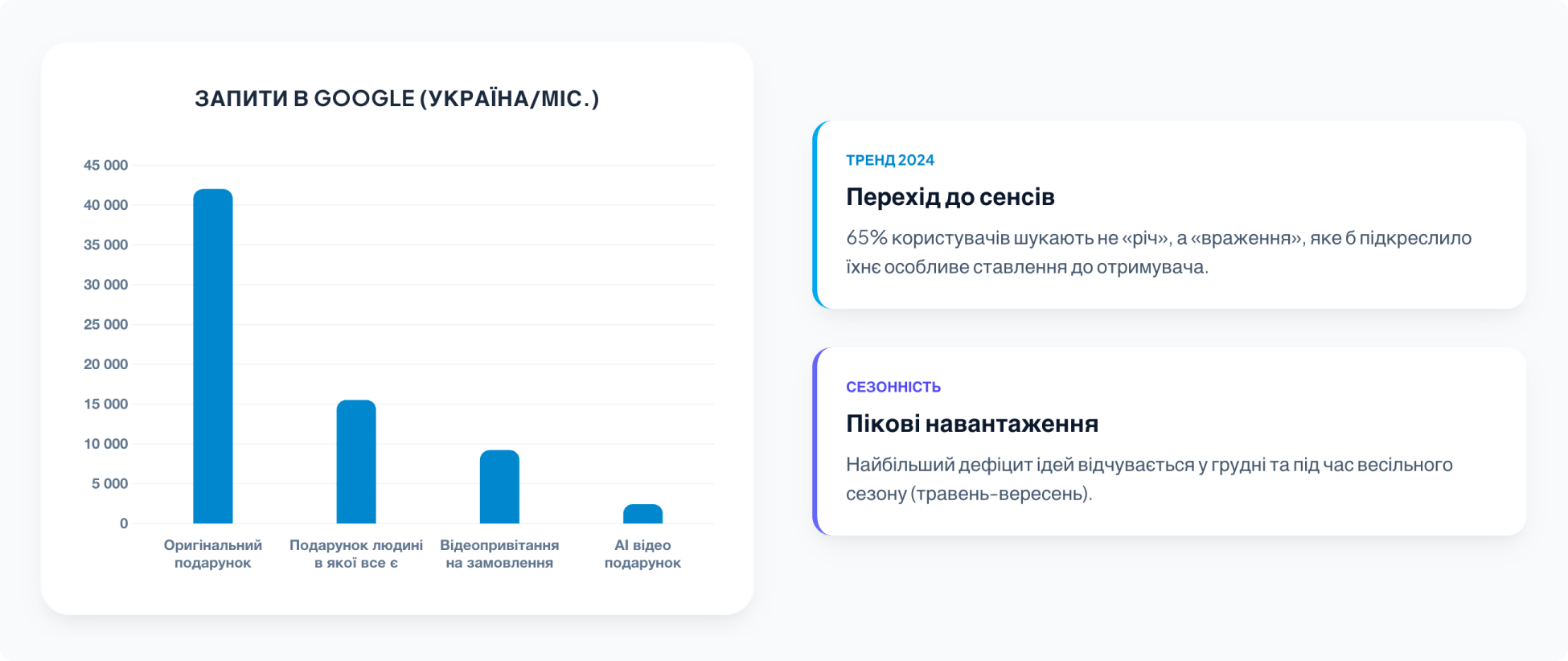
In 2016, the Journal of Consumer Research published a study by Cindy Chan and Cassie Mogilner showing that experiential gifts strengthen relationships between people significantly more than material ones. The reason lies in the intensity of emotions at the moment the gift is "consumed": laughter, tears, nostalgia. The giver doesn't even need to be present at that moment — the emotion will still be associated with them. The paradox is that despite knowing all this, about 78% of people, according to the same researchers, still gave material items recently.
Meanwhile, the price tag matters much less than commonly thought. Researchers Francis Flynn and Gabrielle Adams of Stanford Graduate School of Business discovered an asymmetry: givers are confident that a more expensive gift will evoke greater gratitude, while recipients feel no connection between price and appreciation. At MAS Agency, we see this every day: people are moved most not by the price tag, but by the details — shared memories, inside jokes, and the feeling that this gift could physically never have been made for anyone else.
The Cameo Lesson: Why "Personalized" Celebrity Videos Failed
The idea of gifting emotions through video is not new. Cameo, a platform where celebrities recorded custom greetings, soared during the pandemic to a valuation of one billion dollars with over 30,000 stars on board, and then collapsed just as rapidly: by 2023, its team shrank from 400 to 33 people. There were several reasons, but the main one is telling: the personalization proved to be superficial. A celebrity simply read a name off a teleprompter — they didn't know the birthday person, their story, or their jokes. Formally "personalized", in essence — a generic template.
The takeaway for anyone choosing a gift is simple: value is created not by a famous face in the frame, but by the depth of the story. And this is exactly where artificial intelligence changed everything — now the main hero of the movie isn't a celebrity, but the person receiving the gift.
“Isn't It Just a Single Button in a Neural Network?” No
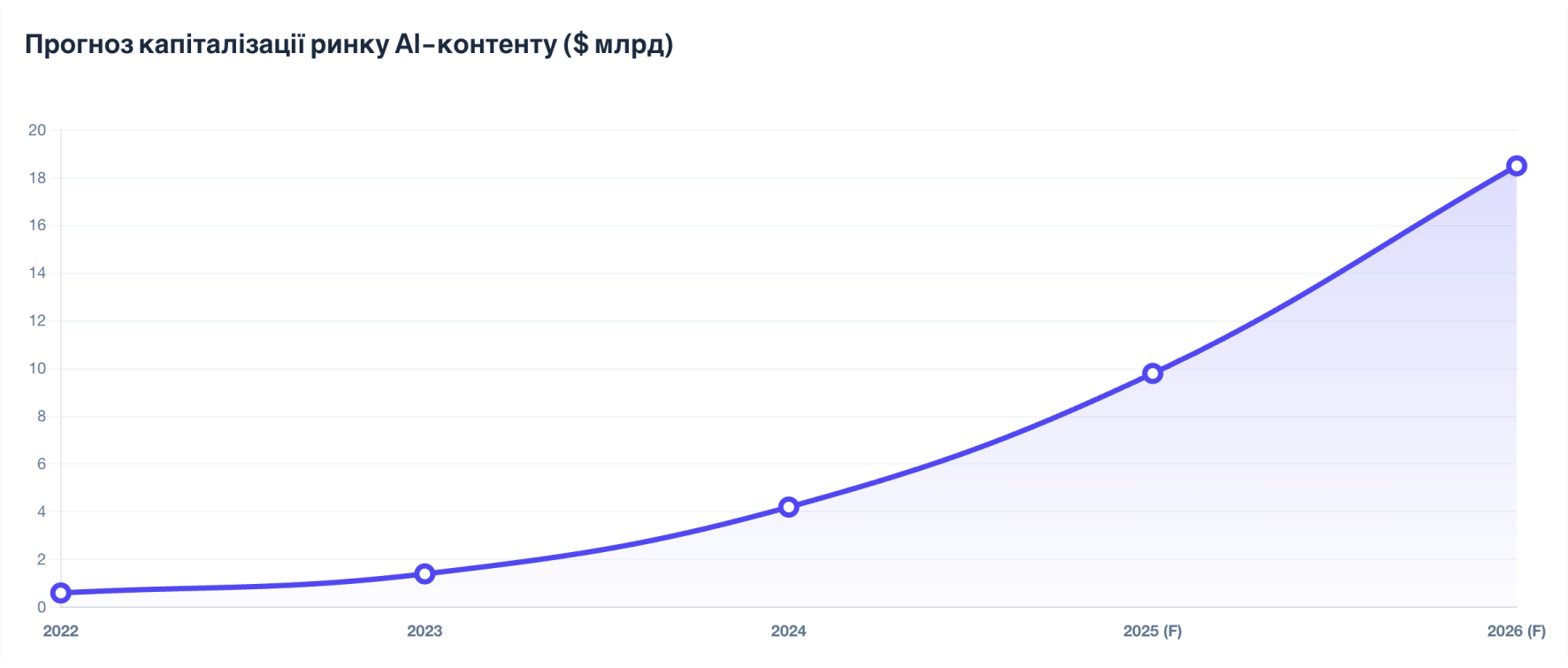
A common myth is that AI video is generated for free in a minute. The reality is quite different. According to Forbes, during peak days OpenAI's compute costs alone for the Sora video generator reached $15 million per day, and in March 2026 the company announced it was closing the standalone app: high-quality video generation turned out to be too expensive even for the market leader. Cinematic quality is still costly — except now it is measured not by film crew shifts, but by computing power and hours of expert work.
In our practice, artificial intelligence is only one part of the production: it creates imagery, animates photos, and suggests visual solutions. But the concept, script, shot selection, character consistency control, editing, sound, and final narrative arc are created by humans. The hardest part is preserving the person's likeness across different scenes and stitching dozens of generated clips into a single cohesive story: this usually takes several rounds of curation and adjustments. Therefore, a personalized film is not a "button," but a team effort lasting from 3 to 10 business days.
What This Looks Like in Practice
One case we love to mention is a movie created for a 65th birthday. Instead of simply "animating photos from an album," we showed the guest of honor in various roles: a barbarian, a pirate, a samurai, a professor. It turned into a fun story where the person recognizes themselves — their features, habits, and character. Production took about ten days, and the main reward was the reaction: the birthday person laughed and was genuinely surprised. That single second is what it's all made for.
This is where the honest answer to "what to give someone who has everything" lies. True personalization isn't just a name in the credits. It is the person's character, their stories, jokes, and images that matter specifically to them. There is an important nuance: such depth is only possible with active participation from the customer. Experts will help with the script and concept, but the memories and details that will take the hero's breath away are known only to you.
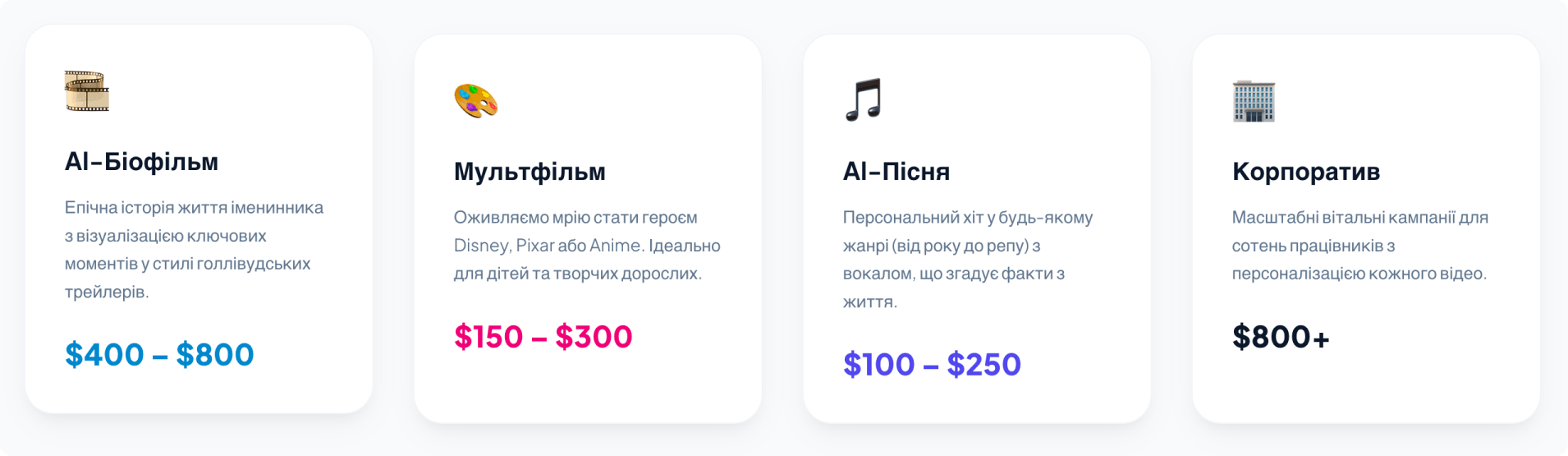
There are many formats: a personal song based on a real story, an animated cartoon where a child becomes the main character, a Love Story or a video invitation for a wedding, a corporate greeting for a team, or a full-scale "life story" for a milestone anniversary. Prices start at $100 and are tailored individually: the budget depends on the format, length, script complexity, custom music creation, special effects, and turnaround time, so the final cost is agreed upon before work begins. In terms of feel, it belongs to a category beyond a simple souvenir, yet far below a lavish wedding banquet — while the memory lasts longer than both.
Complex Cases: Old Photos, Sensitive Stories, Public Figures
The most common questions before ordering are “will the person look like themselves?” and “will there be enough materials?”. Working with old paper photos is entirely possible: taking a photo of them with a smartphone is usually enough. If a photo is torn or faded, that's a special case, but we can help with those too. What affects the result most is not so much resolution, but detail: for video, it is preferable to have several shots of the hero from different angles rather than just one good photo. If materials are scarce, we select a format that accounts for this.
A distinct category is memorial videos honoring people who are no longer with us. Such projects are handled with utmost delicacy: coordinated closely with the family and free of unnecessary spectacle.
Another delicate scenario occurs when the hero of the movie is a public figure whose gift is ordered by family or colleagues. Mass video generation services will simply refuse to work with recognizable faces of politicians or celebrities, so these tasks can only be solved individually. Such movies are never published, and this is where confidentiality ceases to be a formality: all communication is kept strictly between us and the client, provided materials are never shared with third parties, and are deleted upon request after project completion. This, by the way, is the main reason why such projects are best commissioned from a reputable agency rather than a random freelancer from an ad.
In Conclusion
Science tells us: the best gift is one that evokes a powerful emotion and becomes a story worth retelling. Practice adds: such emotion is born from details that cannot be duplicated. So if before a holiday you catch yourself thinking “they already have everything,” it's likely not because there's nothing left to gift — but because material things no longer work. A personal movie, animation, or song where the recipient takes center stage is that rare category of gift that can never be regifted. You can explore examples of our work and formats on the MAS Agency AI Movies & Personalized Greetings page, and if you only have an idea for now — we'll craft the concept together.
Sources: The analysis is based on the study by Van Boven and Gilovich “To Do or to Have?”, research by Chan and Mogilner in the Journal of Consumer Research on experiential gifts, study by Flynn and Adams (Stanford Graduate School of Business) on the relationship between gift price and appreciation, Forbes publications on the economics of AI video generation, as well as materials from Ekonomichna Pravda and The Guardian regarding the personalized video greetings market and the Cameo platform.