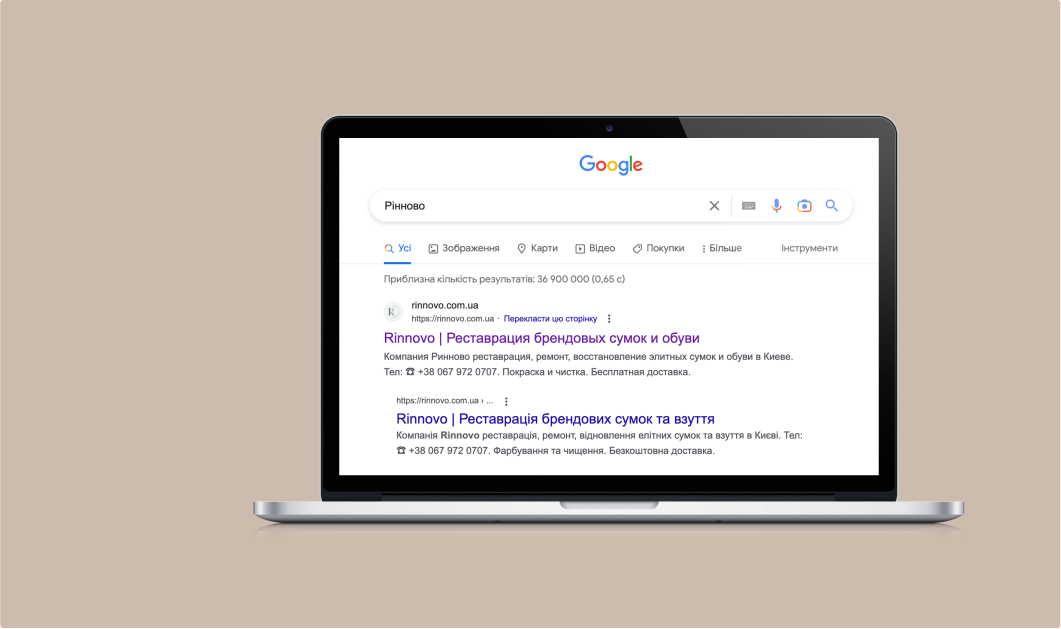
How to Get Your Business into AI Answers: GEO Explained Simply




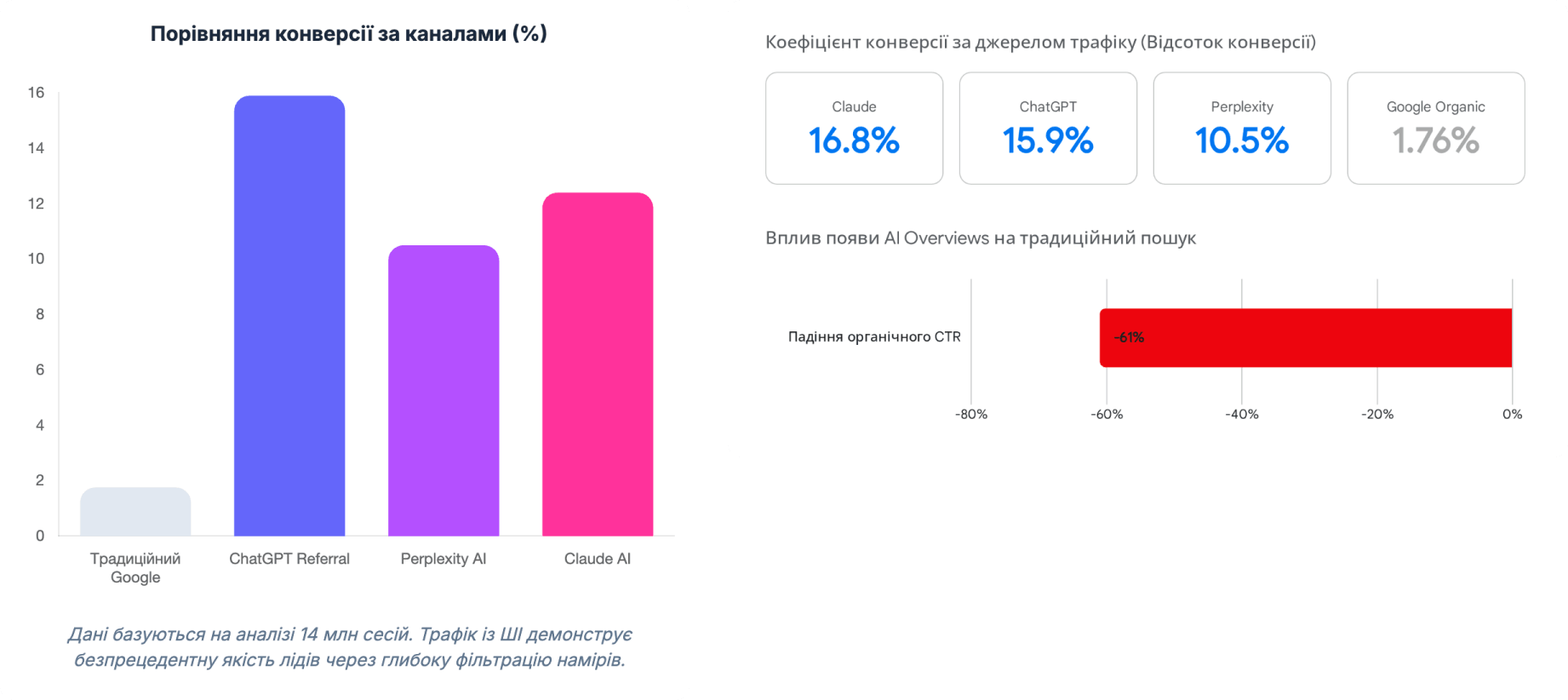
More and more clients are asking questions instead of Googling. ChatGPT, Perplexity, and Google's AI Overviews provide answers directly — and when such an answer appears above traditional search results, organic CTR drops by 61%, according to Seer Interactive. A business that isn't featured in AI responses gradually fades from the customer's sight. The good news is that getting there is a manageable process, and it's called GEO.
What is GEO and how does it differ from SEO
GEO (generative engine optimization) is the process of optimizing content so that AI systems cite your website in their answers. SEO fights for a spot in a list of links, while GEO competes to be cited as a source in generated text. And these are two different races: according to Ahrefs, only 38% of pages cited in AI Overviews rank in the top 10 organic search results for the same query — down from 76% in summer 2025. Ranking first on Google no longer guarantees that AI will notice you.
How AI chooses what to cite
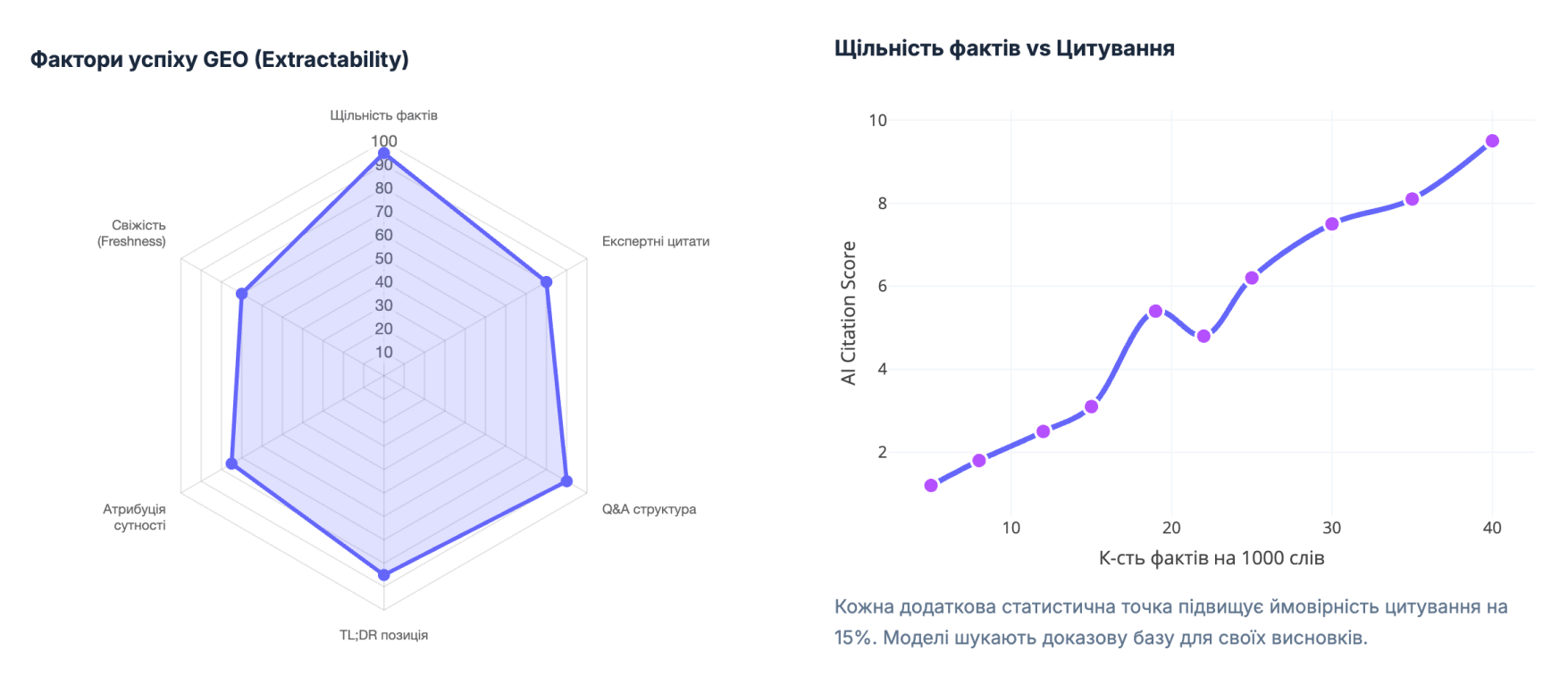
AI cites content from which it can easily extract a specific answer. The model doesn't read a page like a human — it searches for a snippet that can be inserted into the answer as a fact. That’s why content that gets straight to the point wins: according to SparkToro, 44% of citations come from the first 30% of a page's text. Structure matters too: Princeton researchers who coined the term GEO showed that adding statistics, expert quotes, and clear statements increases AI visibility by up to 40%.
What to change on your website first
Start with three things. First, flip your text structure: open every section with a direct answer to the subheading's question, followed by the details. Second, check your robots.txt: AI search bots (OAI-SearchBot, PerplexityBot) must be allowed, otherwise you physically won't get cited; blocking should be reserved for training bots — and only as a deliberate choice regarding content rights. Third, establish a unified digital identity: company name, address, and description must match across your website, Google Business Profile, and social media, as discrepancies are flagged by the model as a sign of unreliability.
How to measure the results
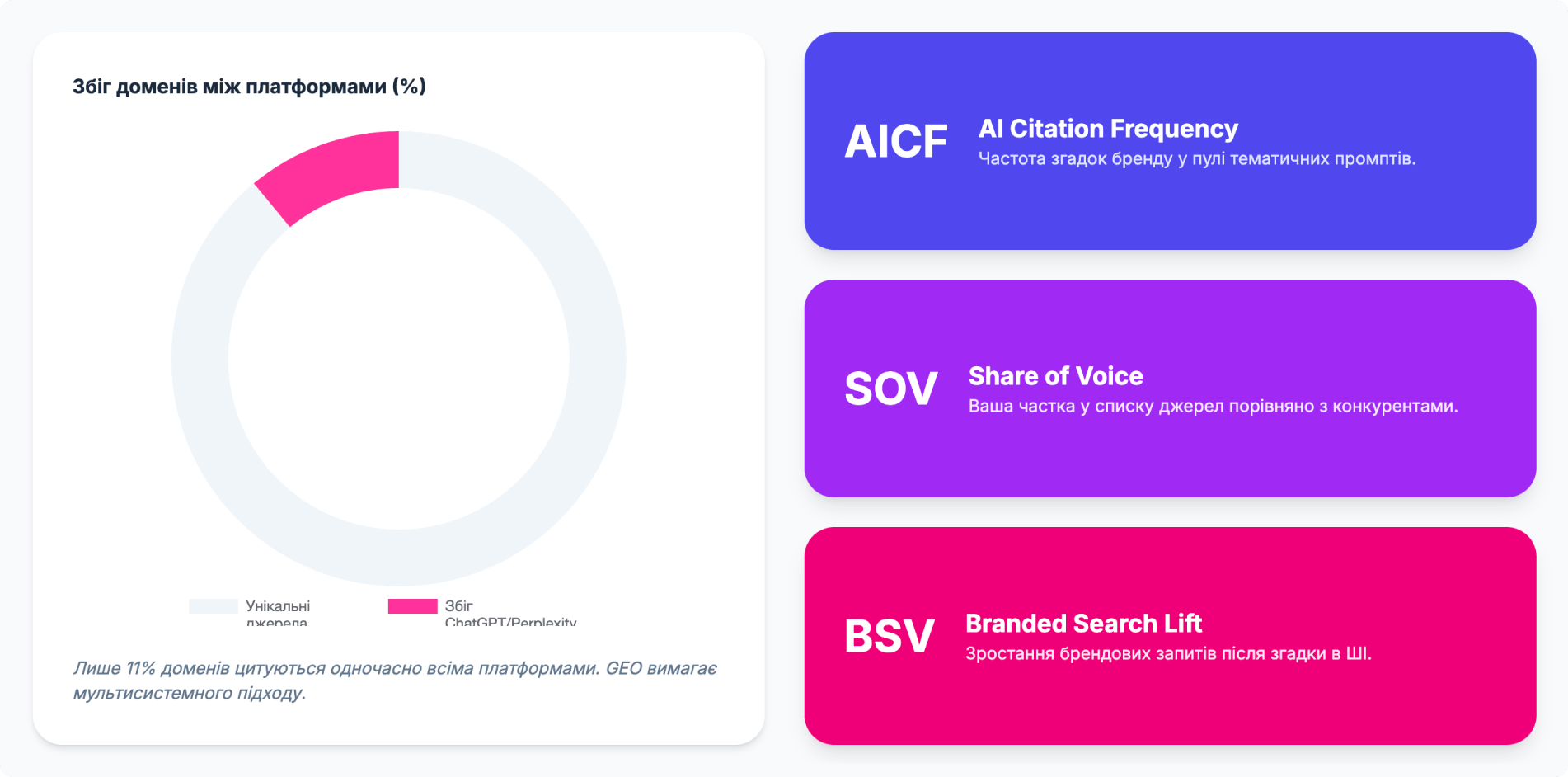
GEO isn't measured by rankings, but by brand mention frequency in AI answers and traffic from AI platforms. In GA4, create a separate channel group for incoming traffic from chatgpt.com, perplexity.ai, and claude.ai — otherwise, they'll be lost in Direct. This traffic may still be small, but it's highly qualified: in a Seer Interactive case study, ChatGPT referrals converted at 15.9% compared to 1.76% from organic search — AI had already "warmed up" the user before the click. We covered AI visibility monitoring tools in a separate article.
Common mistakes
The most common mistake is chasing trendy gimmicks instead of focusing on substance. Half of the guides recommend creating an llms.txt file; at MAS, we advise our clients against it: Google officially stated they don't use it, and SE Ranking's analysis of 300,000 domains found no correlation between having the file and getting cited. The second mistake is blanket-blocking all AI bots "to prevent content theft," effectively removing your site from answers by your own hand. The third is bringing old SEO habits into GEO: models bypass keyword-stuffed texts because they look for facts, not keyword density.
GEO doesn't replace SEO — it builds on top of it: a technically sound site, clear structure, and fact-driven content are essential for both. The difference is that every page should now also be evaluated through the eyes of an AI model: is there an answer worth citing here? This is precisely where we start SEO optimization at MAS Agency — ensuring your site is clear both to Google and to the systems already answering your customers.
Sources: