Reviews as an Asset: Why 4.5 Stars Sell Better Than a Perfect 5




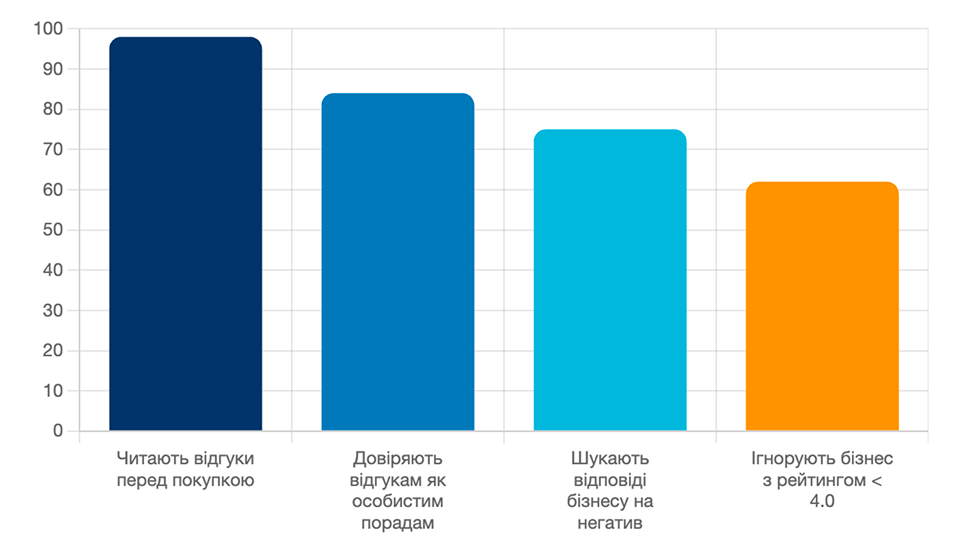
Just a few years ago, reviews were a nice addition to a website. Today, they are a filter that a buyer goes through before even considering your offer. A study by the Northwestern Spiegel Research Center showed that the presence of reviews on a product page increases conversion by about 270%, and for high-ticket items — up to 380%. But there is a less obvious catch: the highest rating does not mean the best sales. A perfect 5.0 raises suspicions of manipulation, so the probability of purchase peaks in the 4.0–4.7 star range. Today's buyer reads "too good to be true" as "something is wrong here."
Ukrainian trust requires money upfront
In Ukraine, this dynamic is even more acute than in the West. According to EVO and Prom, in 2025, Ukrainians spent UAH 256 billion on online purchases — the market is growing despite the war, and a single buyer makes an average of 17–18 orders per year. However, the same war and expensive logistics have shifted the market toward prepayment, and a person is willing to transfer money upfront only to someone they trust.
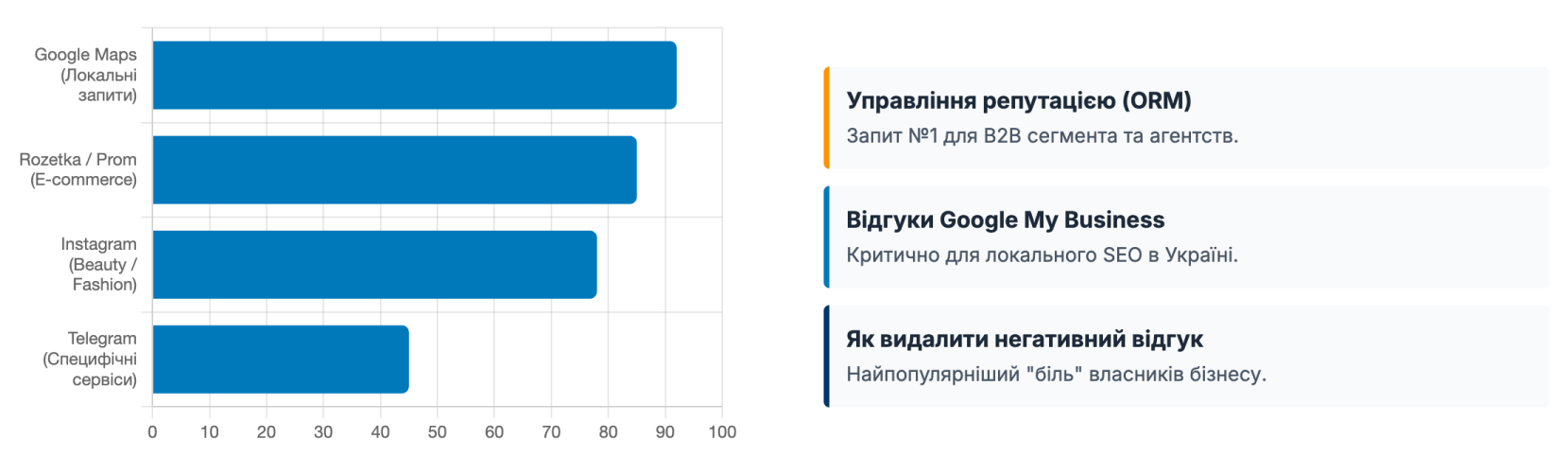
Therefore, Ukrainian buyers cross-check sellers. Seeing a product on Instagram, they open a new tab: search for the name on Google, check the profile on Rozetka or Prom.ua, scroll through reviews on OLX, and sometimes even look for mentions in thematic Telegram channels, from where negative feedback is nearly impossible to remove. If the image across different platforms aligns, trust multiplies. A single contradiction, and the deal falls through. Practical takeaway: reviews with product photos and saved stories in pinned highlights are the best antidote to the fear of prepayment.
The end of the review manipulation era
The main change of 2024–2026 is that manipulating reviews has become legally dangerous. In the US, the Federal Trade Commission (FTC) explicitly banned buying, selling, and ordering fake reviews starting October 2024, as well as offering discounts or gifts for a review with a predetermined tone. The EU is moving in a similar direction.
Google has followed the same path: according to its rules, offering clients any incentive in exchange for a review is a violation. Algorithms (now powered by AI) retrospectively detect unnatural rating spikes, and a public badge stating "Suspected fake reviews were recently removed from this place" may appear on the violator's profile. Upon seeing it, the customer simply goes to a competitor.
Ukraine is also synchronizing with the EU: the new Law "On Consumer Protection" (No. 3153-IX) introduces the status of "verified seller," a state portal "e-buyer," and the State Service of Ukraine for Food Safety and Consumer Protection will be able to demand the blocking of violators' websites. An important nuance that is often misrepresented: most provisions of the law, including the portal, come into force only after the lifting of martial law — so you shouldn't count on them "as early as tomorrow," but preparing for transparent rules of the game is wise right now.
How to collect reviews legally
If you cannot pay for reviews, only one thing remains — remove friction and ask at the right time. And it works: most satisfied customers are ready to leave a review if asked correctly immediately after a positive experience.
For online sales, this means CRM automation: when an order receives the "completed" status, the system automatically sends a request to share feedback in a day or two. The channel matters — SMS is expensive, e-mail gets drowned in spam, so in Ukraine, it is logical to use messengers where the audience lives (Telegram is currently the No. 1 messenger, Viber holds the second position). Ukrainian CRMs like KeyCRM or SalesDrive support such scenarios. For offline businesses — coffee shops, clinics, services — an NFC card or a QR code on the table saves the day: the customer brings their phone close and instantly gets to the review form while the emotion is still fresh.
Negative feedback is not a disaster, it's a test
A profile without a single negative review is just as suspicious as a 5.0-star rating. The question is not whether bad reviews will happen, but how you respond to them — because almost everyone reads the replies. A boilerplate "thank you, your opinion is important to us" is rather irritating; a specific, calm response with a real step toward a solution is what works. An empathetic reaction from the owner wins back some of the disappointed clients and, more importantly, convinces third-party observers who are simply reading the dialogue. It is worth reacting quickly, within a few days, before the complaint becomes the only thing a new buyer sees.
Collected reviews do not have to sit as dead weight on third-party platforms. For an online store, they can be displayed as stars directly in search results via Product micromarkup — this increases the click-through rate of the snippet. One caveat: Google does not show such stars if a company marks up reviews "about itself" on its own website, so correct technical implementation is critical here.
Conclusion
Working with reviews has long ceased to be the task of a single PR specialist at the end of the quarter. It is a continuous process at the intersection of sales (which gather feedback), development (which displays it in search), and marketing (which defuses crises and pushes negative content out of the top search results). Ultimately, every real review turns into an asset that works for the brand for years — and systematic building of this process while keeping the search results for the company name clean is exactly what the reputation management (SERM) direction at MAS Agency helps to achieve.
Sources: the analysis is based on research by the Spiegel Research Center (Northwestern) on the impact of reviews on conversion, BrightLocal data on trust thresholds, EVO and Prom data on the Ukrainian e-commerce market in 2025, Gradus "Media Consumption 2025" study, official FTC materials on the Final Rule 2024 and Google Business Profile rules, as well as the text of the Law of Ukraine "On Consumer Protection" No. 3153-IX.